
Corrosive Waste Disposal for Businesses
Need to get rid of waste acids, caustics, or other corrosive liquids? Dimension provides compliant corrosive waste disposal for businesses of every size — from a few jugs of spent cleaner to 55-gallon drums of waste acid or 275-gallon totes of caustic solution. We handle sulfuric, hydrochloric, nitric, and phosphoric acids, sodium and potassium hydroxide (caustic soda and potash), ammonia solutions, battery acid, etching, pickling, and plating baths, descalers, and industrial rust removers, all with full EPA, DOT, and RCRA documentation.
Corrosive waste is regulated under the RCRA D002 corrosivity characteristic — typically an aqueous liquid with a pH at or below 2 or at or above 12.5, or one that corrodes steel — and the DOT transports it as Class 8 corrosive material. That means it can't go in your dumpster or down a drain: it requires compatible containers, trained handlers, and a hazardous-waste manifest. Dimension works directly with licensed treatment and neutralization facilities to manage all of that for you, at competitive rates that are typically 30% less than what traditional hazardous-waste haulers charge. Most orders are priced instantly through our Mirror Mirror AI, and you can schedule a pickup right away.
Get started today — click the button for an instant price quote, or contact our team for recurring routes and large-volume acid or caustic removal.

Trusted by 10,000+ clients
Nationwide waste partner for Trek Bikes, Instacart, Sares Regis and more! Trusted by state governments of California, Texas and Connecticut.




Ready to get rid of your corrosive waste?
Get an instant price quote powered by our Mirror Mirror AI. Most orders are priced in minutes.
Get an Instant QuoteProudly Serving





Public Sector
Our Corrosive Waste Disposal Solution
- Less Than 50% Compared to Competitor Pricing Disposing of corrosive acids and caustics through traditional hazardous-waste haulers can be slow and costly, especially when containers have to be handled and neutralized separately. Dimension works directly with licensed treatment, neutralization, and recycling facilities and prices corrosive liquids as a dedicated hazardous stream — typically 30% less than what competitors charge for the same DOT Class 8 service.
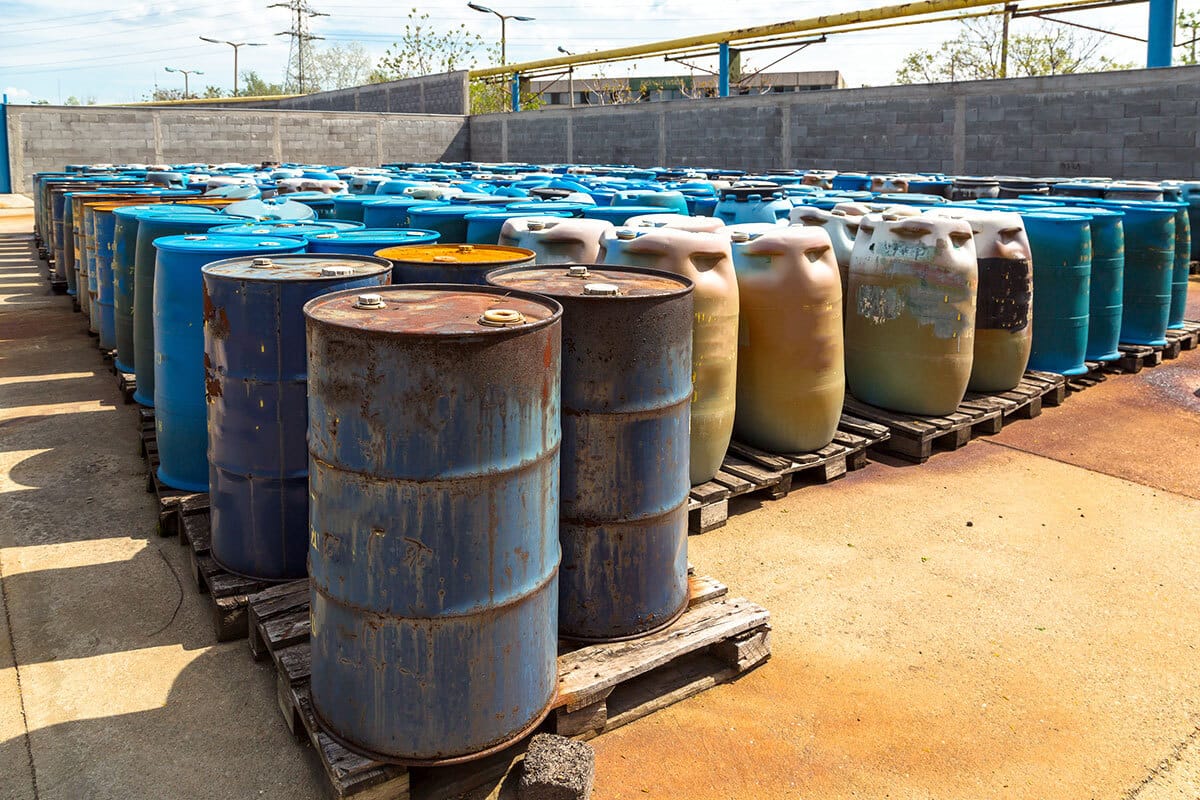
- Acids, Caustics and Every Corrosive Stream We take waste acids (sulfuric, hydrochloric, nitric, phosphoric, acetic, and hydrofluoric), caustics and bases (sodium and potassium hydroxide, ammonia, lime slurry), spent plating, etching and pickling baths, battery and electrolyte acid, descalers, and acidic or alkaline industrial cleaners. Whether it sits in jugs, carboys, 5- to 55-gallon drums, or 275- to 550-gallon totes, our providers carry the compatible containment to move it safely.
- Neutralized, Recovered and Diverted We focus on sustainability and keep corrosive waste out of landfill wherever possible. Spent acids and caustics are neutralized and treated to safe pH, suitable streams are recovered or recycled, and compatible metals and containers are reclaimed. Every pickup includes a diversion report so you can document exactly how your corrosive waste was treated.
- Nationwide Coverage, Fully Documented We serve every U.S. zip code with service from 8 AM to 8 PM local time. Our white-glove network of EPA-certified, DOT Hazmat transportation partners handles compatible packaging, hazardous-waste manifesting, and Bill of Lading documentation — whether you need a single carboy of acid removed or recurring corrosive pickups across multiple plants.
Benefits of Professional Corrosive Waste Disposal
- Stay Compliant with EPA, DOT and State Regulations Corrosive liquids carry the RCRA D002 characteristic (pH at or below 2, at or above 12.5, or capable of corroding steel) and are DOT Class 8 dangerous goods, so they must be packaged in compatible containers, labeled, manifested, and transported by trained, permitted handlers. Improper acid or caustic disposal can cause serious injury, equipment damage, and significant fines. Dimension manages every regulatory requirement — manifests, BOLs, and DOT-compliant transportation — so your business stays in full compliance in any state.
- Remove Burn and Reaction Hazards from Your Site Open carboys of acid, leaking caustic drums, and incompatible chemicals stored side by side are burn, fume, and violent-reaction hazards that draw OSHA and fire-marshal scrutiny. Scheduled Dimension pickups clear corrosive waste out of your lab, plant, or wash bay and keep incompatible materials properly segregated so your storage area stays safe and under limits.
- Treatment and Recovery Over Disposal Many corrosive wastes can be neutralized, treated, or recovered rather than simply destroyed — spent acids reclaimed, caustics reused in treatment, and valuable metals recovered from plating solutions. Choosing professional corrosive treatment reduces your environmental footprint and gives you documentation you can report on.
- Corrosive Waste Disposal Near Me Finding a hauler licensed and equipped for DOT Class 8 acids and caustics is difficult, especially for businesses managing multiple labs, plants, or wash bays. Dimension's nationwide network means you don't have to research state corrosive-waste rules or source local hazmat haulers — we coordinate everything for you, wherever you are.
Case Studies
A growing bike franchise opening shops across the country needed a dependable way to dispose of the hazardous waste building up at each location. Coordinating compliant disposal store by store was slow and risky — and any misstep exposed the business to regulatory penalties, environmental damage, and hazards for staff and customers.
Dimension consolidated it into a single program. Through a dedicated Account Manager, pickups were scheduled on demand within narrow time windows; trained crews moved the waste to licensed, EPA-approved facilities in line with transportation rules; and Dimension handled all the paperwork — manifests and certificates of disposal — to keep the franchise compliant at every level of government. National coverage meant one consistent, cost-effective solution across all stores, with junk removal and dumpster rental folded in, and no fines along the way. Waste acids and caustics are handled through that same compliant, fully documented hazardous-waste service.

What Does Corrosive Waste Disposal With Dimension Look Like?
- Scheduling: Tell us about your corrosive waste — whether it's acid or caustic, the specific chemicals if you know them, approximate volume and container or tote sizes, and your business location. Our AI-powered Mirror Mirror quoting prices most orders instantly; complex or unknown mixtures get a manual quote within 1 business day. Hazardous pickups require a minimum 5-day lead time.
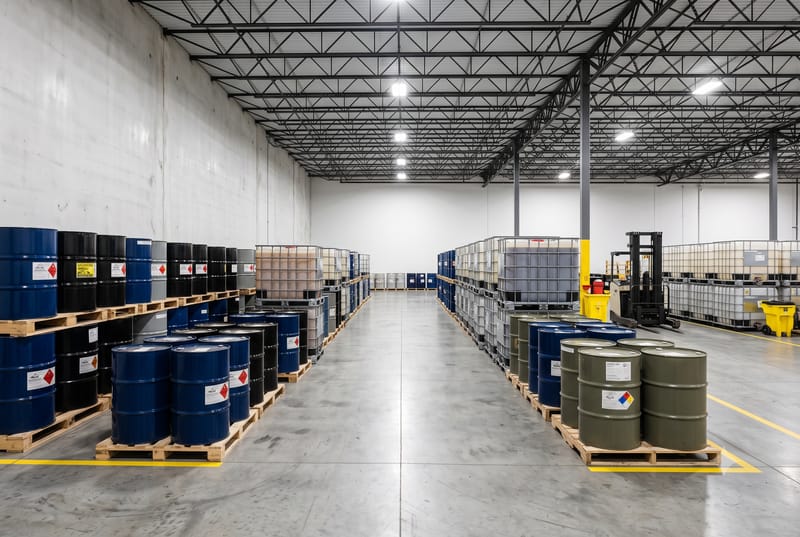
- Removal: A certified disposal technician from our EPA-certified, DOT Hazmat network arrives with compatible containment, safely loads your acids and caustics while keeping incompatible materials separated, and handles all hazardous-waste labeling and manifesting. We handle everything from a single carboy to 550-gallon industrial totes.
- Compliance: Your corrosive waste is transported to licensed and approved treatment facilities where acids and caustics are neutralized to safe pH, recoverable streams are reclaimed, and the rest is treated under permit. After completion you receive full documentation including diversion reports, manifests, and BOLs for your regulatory records.
Frequently Asked Questions
What is considered corrosive waste?
Corrosive waste is any discarded material that can chemically eat away at living tissue, metal, or other materials. Under the EPA's RCRA rules it carries the D002 corrosivity characteristic: an aqueous waste with a pH at or below 2 (strongly acidic) or at or above 12.5 (strongly alkaline), or a liquid that corrodes steel faster than a set rate. For transportation, the DOT regulates corrosives as Class 8 dangerous goods.
Common commercial corrosive wastes include sulfuric, hydrochloric, nitric, and phosphoric acids, sodium and potassium hydroxide (caustic soda and potash), ammonia solutions, battery and electrolyte acid, spent plating, etching, and pickling baths, descalers, and strong industrial cleaners. Dimension handles all of these for businesses, with the documentation regulators require.
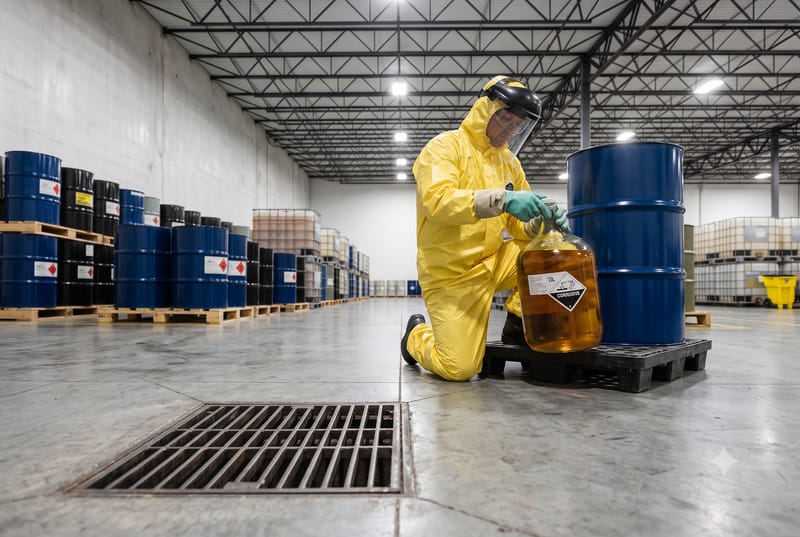
Why can't I pour acids or caustics down the drain?
Pouring corrosive acids or caustics down the drain is both dangerous and illegal for businesses. Strong acids and bases can damage plumbing, react violently with other substances already in the line, release toxic fumes, and harm the workers, treatment systems, and waterways downstream. Discharging corrosive waste without a permit can lead to significant fines and liability.
Corrosive waste has to be collected in compatible containers, kept separated from incompatible chemicals, and transported under a hazardous-waste manifest to a licensed facility for neutralization or treatment. Dimension's service is built around exactly these requirements, so your acids and caustics are handled safely and documented end to end.