
Commercial Composting Services
Dimension's composting solutions turn the organic waste your property already produces — food scraps, food-soiled paper, and certified compostable packaging — into a resource instead of a landfill charge. We design the program around how your buildings actually work, whether you manage multifamily residential properties, an office portfolio, or a food-service operation, and we run it on a weekly schedule so residents and staff never have to think about it.
Three service levels cover most properties. Outdoor bins only places composting containers alongside the landfill dumpsters you already have and swaps them weekly. Valet composting door to door gives every unit its own bin and collects — and cleans — it at the doorstep each week. Valet composting plus trash pairs that with trash collection five days a week, so one crew handles both streams. Bins are sized during a site visit rather than guessed at, and outdoor containers come with signage.
Composting is a subscription rather than a one-off haul, and it is quoted that way. Every request is reviewed by a person and comes back as a proposal instead of an instant checkout price, because the answer depends on your unit count, how many collection points you have, which package fits, and whether a commercial composting facility serves your market. The first available service date is four business days out and collections run on weekdays.
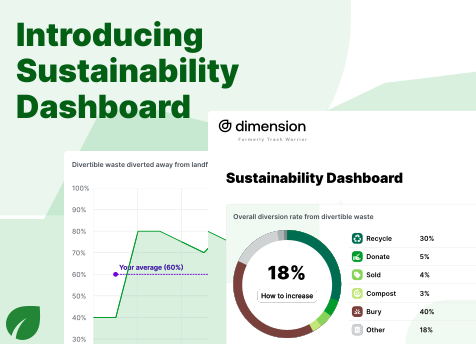
Every program includes tracking. Collected volumes are recorded by material stream and reported back quarterly, and the same data feeds Dimension's Sustainability Dashboard — so the diversion you are paying for turns into a number you can put in a board report, an ESG disclosure, or a city compliance plan.

Trusted by 10,000+ clients
Nationwide waste partner for Trek Bikes, Instacart, Sares Regis and more! Trusted by state governments of California, Texas and Connecticut.




Ready to start composting at your property?
Tell us about the property — units, buildings, and where the bins would go — and we will come back with a proposal. Composting programs are quoted by a person, not priced instantly, because the right answer depends on your site.
Get a Free QuoteProudly Serving






Public Sector
Composting with Dimension

Sustainability Focus
We aim to divert from landfills as much as possible

Customized Solutions
We design the best plan for your business following city regulations and your own requirements

Monitoring
With Dimension's Sustainability Dashboard, you can easily track your progress towards sustainability.
Dimension's Composting Solutions
- Outdoor Bins Only The lightest-touch program and the usual starting point for a property that has never collected organics. We place composting bins within 25 feet of every landfill trash dumpster on site, in sizes from 64 to 96 gallons, so residents and staff meet a compost bin wherever they already take their trash. The bins are swapped weekly rather than emptied in place, which is what keeps a shared organics container from becoming the thing everybody complains about. Placement, count, and size are set at the site visit, based on how many units feed each collection point.
- Valet Composting, Door to Door Every tenant gets their own composting bin and sets it outside their door on a fixed weekly night; our team collects it, cleans the bin, and returns it. Participation is dramatically higher than with shared outdoor bins because nobody has to carry a bucket of food scraps across a parking lot, and the cleaning step removes the objection that ends most multifamily composting programs — the smell. This is the package most often chosen by properties that need every unit to have genuine, convenient access to composting.
- Valet Composting Plus Trash Collection The same weekly doorstep composting service, paired with trash collection five days a week. One crew, one schedule, and one vendor covering both streams, which is why properties already paying for a doorstep trash amenity usually find that adding compost to it costs less than running a second program alongside it. It also removes the most common failure mode in valet composting: residents putting organics in the trash bag because that is the container that gets picked up more often.
- One Program Across a Portfolio Property management companies rarely have one building, and buildings rarely have identical layouts. Each property is assessed on its own — unit count, collection points, bin sizing, and the local rules that apply — but they run through one point of contact rather than a different hauler in every submarket. One thing we do not do is promise coverage we cannot deliver: commercial composting depends on a processing facility being reachable from your site, so we confirm facility access market by market before quoting and tell you plainly where a property cannot be served.
What Can Be Composted?
Composting is a great way to reduce waste and create nutrient-rich soil. Here are the main categories of items that can typically be composted through our service:

Food Scraps
This includes fruit and vegetable peels, cores, and trimmings; eggshells; coffee grounds and filters; tea bags (without staples); nuts and shells; bread, grains, and pasta; meat and bones; dairy products; and spoiled or moldy food.

Food-Soiled Paper
Paper products that have been in contact with food can often be composted. This includes pizza boxes, paper plates, napkins, paper towels, paper food packaging (if not plastic-coated), and parchment paper.

BPI-Certified Compostable Products
These are products certified by the Biodegradable Products Institute (BPI) as compostable. They include compostable bags, utensils, cups, and containers made from materials like PLA (polylactic acid) or other plant-based plastics. Always look for the BPI certification logo to ensure the product is truly compostable.

Dimension's Approach to Composting Services
- Assessment and Setup: We visit each property to count residents or staff, look at where bins can physically go, and understand what the site already does with its trash. That produces the bin count and sizing, the collection points, and the package that fits. We then supply appropriately sized bins along with signage for the outdoor containers, so the program launches labeled instead of being explained by word of mouth.
- Weekly Collection: A weekly collection schedule is set, and everything collected is transported to a composting facility for processing. Weekly is the floor rather than the target — it is the minimum cadence organics need before odor becomes a problem, and it is what ordinances that regulate composting generally require. Collections run on weekdays, and the first available start date is four business days after the program is agreed.
- Education and Engagement: Contamination is a knowledge problem, so residents and employees get educational resources in more than one format: printed brochures, in-person sessions, workshops, and online videos. New residents and new hires are the recurring gap in every organics program — people who moved in after launch never saw the launch — which is why education is treated as an ongoing obligation rather than a one-time email.
- Monitoring and Reporting: Volume and material type are tracked over time, and you receive quarterly reports covering progress and any problems encountered on route. Those reports are the paper trail for a city plan, a lender or owner request, or a corporate sustainability disclosure, and they are how a contamination trend at one building gets caught before it becomes a rejected load.
- Ongoing Support: Property managers and residents get continued support after launch. Collection schedules and service levels can be adjusted based on what the reports show and how the property changes through the year — occupancy swings, seasonal volume, a bin location that turned out to be wrong. A composting program is a standing service, and it should be tuned like one.
Frequently Asked Questions
What can and cannot go into commercial composting?
Three categories go in: food scraps, food-soiled paper, and BPI-certified compostable products. Food scraps cover fruit and vegetable trimmings, eggshells, coffee grounds and filters, tea bags, bread and grains, and spoiled food — plus meat, bones, and dairy, which commercial facilities can process at temperatures a backyard pile never reaches. Food-soiled paper covers napkins, paper towels, pizza boxes, paper plates, and uncoated paper packaging, all of which are compostable precisely because the food on them makes them unrecyclable.
What stays out is anything that will not break down: plastic bags and film, plastic-lined cups and containers, foil, glass, metal, produce stickers, and coffee pods. Items marketed as "biodegradable" without a BPI certification also stay out, because that word carries no processing standard behind it. The accepted list is ultimately set by the composting facility that serves your property, so we confirm the specifics with you during setup rather than publishing one national list and hoping it matches.

How much does commercial composting cost, and how is it priced?
Composting is priced as a recurring service rather than per haul, and multifamily programs are normally quoted on a per-door, per-month basis — so the two numbers that move your price most are how many units the property has and which of the three packages you run. Outdoor bins only is the least expensive; door-to-door valet costs more because a person visits every unit and cleans every bin; valet plus five-day trash collection is the top tier because it replaces two services at once. Collection points, bin sizing, site access, and how far the nearest composting facility is all feed into the final figure.
We do not publish a rate card for this service, and that is deliberate — every composting request is reviewed and quoted by a person rather than priced automatically, because a plausible-looking number that does not survive the site visit helps nobody. Send us the property details and you will get a proposal with the package, the bin plan, and the price on it. If you are comparing options, ask any hauler you talk to whether their quote includes bin cleaning and swaps, because that is usually where the difference sits.

Do you compost for restaurants and food-service businesses?
Yes. Restaurants, cafés, caterers, ghost kitchens, corporate cafeterias, and grocery operations generate the densest organic waste stream of any commercial customer — back-of-house prep trimmings, plate scrapings, spoiled inventory, coffee grounds, and a constant flow of food-soiled paper. The service works the same way it does at a multifamily property: containers sized to your volume, placed where the kitchen actually works rather than where the dumpster happens to be, and collected on a fixed weekly schedule or more often if your volume needs it.
Food businesses also carry the heaviest regulatory exposure. Several cities require food-permitted businesses specifically to divert organics — Austin is one, and it accepts food donation and animal feed alongside composting as ways to satisfy the rule. If you operate in a city with an organics mandate, tell us when you request a quote and we will build the program against that ordinance's requirements rather than a generic template.

Do you supply the bins, and how often are they collected?
We supply them. Bin sizes are decided at the site visit rather than ordered blind: outdoor containers run from 64 to 96 gallons depending on how many units feed each collection point, and door-to-door programs issue a smaller bin per unit. Outdoor containers arrive with signage on them, so the program is labeled from day one instead of relying on residents remembering an announcement.
Collection is weekly at minimum on every package. Outdoor bins are swapped for clean containers rather than emptied in place; door-to-door bins are cleaned at every single pickup; and the top-tier package adds trash collection five days a week on top of the weekly compost route. Collections run on weekdays, weekend service is not available on this program, and the earliest a new program can start is four business days out.