
Commercial Composting Services in Austin
Composting is not optional for Austin multifamily properties. Since October 1, 2024, the City of Austin has required every multifamily property with five or more units to give residents and employees convenient access to commercial composting collection, alongside the recycling access the Universal Recycling Ordinance already required. Apartments, condominiums, dormitories, assisted living facilities, and nursing homes are all covered. Dimension builds and runs that program for you.
The ordinance is specific rather than aspirational. You need the equivalent of one gallon of composting capacity per unit, collection at least once a week by a licensed hauler with the material processed at a composting facility, outdoor composting containers within 25 feet of every landfill trash container, signage in at least two languages, and documented education for residents and employees. Violations of the URO fall under Austin City Code Chapter 15-6 as a Class C misdemeanor, punishable by fines of up to $2,000 per day, per offense.
Our Austin service is built to those requirements rather than adapted to them afterwards. We size bins from the unit count, place outdoor containers to the 25-foot rule, collect weekly, clean the bins on the door-to-door program, and give you quarterly reports on what was collected — which is the same evidence you need when you file your annual recycling plan with Austin Resource Recovery between October 1 and February 1.
Composting programs are quoted as recurring service after a site visit, not priced from a form, and the earliest start date is four business days out with collections on weekdays. If your property is in the city and you are not yet offering composting, the useful first step is finding out what compliant capacity would actually look like on your site.

Trusted by 10,000+ clients
Nationwide waste partner for Trek Bikes, Instacart, Sares Regis and more! Trusted by state governments of California, Texas and Connecticut.




Ready to meet Austin's composting requirement?
Send us the property — unit count, buildings, and where your trash containers sit today — and we will come back with a bin plan and a proposal. Austin programs are scoped by a person against the ordinance, not priced automatically.
Get a Free QuoteProudly Serving






Public Sector
Austin's Universal Recycling Ordinance Amendment
- Offer an equivalent of one-gallon composting bin per unit.
- Ensure composting bins are picked up at least once a week.
- For community bins, place them within 25 feet of all landfill trash containers.
- Provide proper signage for outdoor containers in at least two languages.
- Provide educational resources to residents and employees within 30 days in the following situations:
- A new hire or move-in
- Changes in the composting program
- Annually

Composting with Dimension

Sustainability Focus
We aim to divert from landfills as much as possible

Customized Solutions
We design the best plan for your business following city regulations and your own requirements

Monitoring
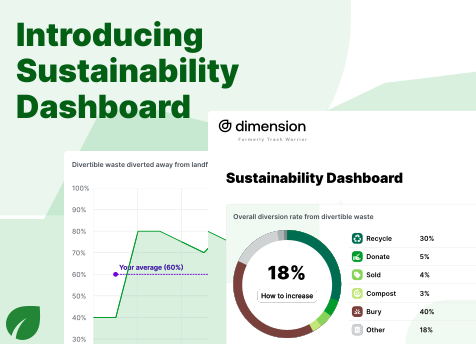
With Dimension's Sustainability Dashboard, you can easily track your progress towards sustainability.
How Dimension Meets Each URO Requirement
- One Gallon of Composting Capacity Per Unit Austin requires the equivalent of one gallon of composting capacity per unit, and allows large shared containers to satisfy it rather than demanding an individual bin per door. Both of our multifamily packages get you there from different directions: the door-to-door program issues every tenant their own composting bin, which is the most literal reading of the requirement and the one residents find easiest to use; the outdoor program meets the same capacity with shared 64 to 96 gallon containers sized against your unit count at the site visit. Either way, the math is done from your actual door count before anything is delivered.
- Collection at Least Once a Week The ordinance sets a weekly minimum and requires that material be collected by a licensed hauler and processed at a composting facility — not simply removed from the property. Weekly collection is the baseline on every Dimension composting package: outdoor bins are swapped for clean containers each week rather than emptied in place, and door-to-door bins are collected from each unit weekly. Properties with higher volume can run more frequently, and the collection schedule is documented so the frequency is easy to report.
- Containers Within 25 Feet of Every Trash Container Austin requires all outdoor recycling and composting dumpsters and carts to sit 25 feet or less from all landfill trash dumpsters and carts, and requires indoor common-area bins to be grouped with the trash bin wherever one is provided. Our outdoor package is designed around exactly this constraint — composting bins are placed within 25 feet of every landfill trash dumpster on the property. Container placement is worked out during the site visit, which is also when we flag any enclosure that will not physically satisfy the rule as it stands.
- Signage in at Least Two Languages Every outdoor container and collection point needs a sign naming the stream and listing accepted materials, in at least two languages, and indoor bins need signage on or near them. We supply signage with the outdoor containers we deliver, and we scope the language requirement with you at setup rather than assuming it. Austin Resource Recovery also publishes free composting education posters in English paired with Spanish, Arabic, Chinese, Korean, or Vietnamese, which properties can print for indoor bins — worth using, since the two-language rule is one of the most commonly missed items on the annual plan.
- Resident and Employee Education The URO requires composting education for residents and employees, in two languages, delivered within 30 days of a move-in or a new hire, again whenever the program changes, and once every year — with the timing and method documented in your plan. Dimension provides the educational material in several formats: printed brochures, in-person sessions, workshops, and online videos. The recordkeeping obligation stays with the property owner or manager, so treat the launch as the start of a recurring obligation rather than a completed task, and keep the training and attendance logs the City asks for.
- Evidence for Your Annual Recycling Plan Every year between October 1 and February 1 you file a recycling plan reporting how the property meets both the recycling and composting requirements. It asks for a hauler invoice or contract receipt showing the size, number, and location of your containers and how often they are collected, your property ID, container and sign locations, and how you educate residents and employees. Dimension's service documentation and quarterly diversion reports cover the collection side of that filing, so the plan becomes a matter of assembling records you already have.
What Can Be Composted?
Composting is a great way to reduce waste and create nutrient-rich soil. Here are the main categories of items that can typically be composted through our service:

Food Scraps
This includes fruit and vegetable peels, cores, and trimmings; eggshells; coffee grounds and filters; tea bags (without staples); nuts and shells; bread, grains, and pasta; meat and bones; dairy products; and spoiled or moldy food.

Food-Soiled Paper
Paper products that have been in contact with food can often be composted. This includes pizza boxes, paper plates, napkins, paper towels, paper food packaging (if not plastic-coated), and parchment paper.

BPI-Certified Compostable Products
These are products certified by the Biodegradable Products Institute (BPI) as compostable. They include compostable bags, utensils, cups, and containers made from materials like PLA (polylactic acid) or other plant-based plastics. Always look for the BPI certification logo to ensure the product is truly compostable.

Getting an Austin Property Compliant
- Site Visit and Capacity Math: We visit the property, count units and collection points, and look at where containers can physically sit relative to your existing landfill trash dumpsters. That produces the capacity figure the ordinance actually asks for — the equivalent of one gallon per unit — and the package that delivers it, whether that is a bin at every door or shared 64 to 96 gallon containers. Anything about the site that will not clear the requirement as it stands, such as an enclosure more than 25 feet from a trash container, gets flagged here rather than after delivery.
- Bin Delivery and Compliant Placement: Appropriately sized bins are delivered and placed, with outdoor composting containers positioned within 25 feet of every landfill trash dumpster and cart on the property, and signage supplied for the outdoor containers. Indoor common areas that offer a landfill trash bin need recycling and composting bins grouped alongside it, labeled in at least two languages — we scope that with you so the indoor and outdoor sides of the requirement land together rather than months apart.
- Resident and Employee Launch: Educational resources go out to residents and employees in the formats that actually get read — brochures, in-person sessions, workshops, and online videos. Austin requires this education within 30 days of a move-in or new hire, on any program change, and annually thereafter, in two languages, with the timing documented. Build the move-in packet and the new-hire packet around it at launch; that is the piece properties most often let slip once the initial rollout is over.
- Weekly Collection Begins: Collection starts on a fixed weekly schedule at minimum, with material transported to a composting facility for processing. Outdoor bins are swapped for clean containers each week; door-to-door bins are collected and cleaned at every pickup. The earliest a new program can begin is four business days out, and collections run on weekdays — worth planning around if you are trying to launch before the plan filing window.
- Reporting and the Annual Filing: Collected volume and material type are tracked, and you receive quarterly reports on progress and any issues found on route. When the plan window opens on October 1, you have the collection frequency, container sizes and locations, and diversion figures in hand, along with your service documentation. The filing itself, the property ID, and the education recordkeeping remain your responsibility — but the evidence behind them is already assembled.
Frequently Asked Questions

Which Austin properties have to offer composting, and since when?
Multifamily properties with five or more units, since October 1, 2024. The City of Austin requires those properties to give residents and employees convenient access to commercial composting collection, on top of the recycling access the Universal Recycling Ordinance already required. "Multifamily" is defined broadly — apartments, condominiums, dormitories, assisted living facilities, and nursing homes are all in scope — and responsibility sits with the property owner or manager, typically whoever oversees the contract for landfill trash, recycling, and composting.
Food-permitted businesses have a parallel obligation under the same ordinance: they must give employees convenient access to a method that keeps organic material out of the landfill. Composting is one route, and food donation and feeding animals are the others Austin recognizes. If you run a restaurant, café, or grocery operation in the city rather than a residential property, that is the requirement that applies to you.

What exactly does the ordinance require a multifamily property to do?
Six things, in practice. Offer the equivalent of one gallon of composting capacity per unit, which large shared containers can satisfy. Have compostables collected at least once a week by a licensed hauler and processed at a composting facility. Accept food scraps, food-soiled paper, and BPI-certified compostable products. Keep all outdoor composting and recycling containers 25 feet or less from every landfill trash container, and group indoor common-area bins together. Post signs on outdoor containers and on or near indoor bins, naming the stream and listing accepted materials, in at least two languages.
Then document it. Educational resources go to residents and employees in two languages within 30 days of a move-in or new hire, whenever the program changes, and every year — and you file a recycling plan every year between October 1 and February 1 reporting how the property meets all of it. The plan asks for a hauler invoice or contract receipt showing container size, number, location, and collection frequency, plus your property ID and details of how you deliver education. There is also a Zero Waste Business Rebate of up to $3,000 available after filing, for properties that go beyond the minimum requirements.

What happens if a property is not compliant?
Violations of the Universal Recycling Ordinance fall under Austin City Code Chapter 15-6 and are a Class C misdemeanor, punishable by fines of up to $2,000 per day, per offense. Because the exposure is per day and per offense rather than a single flat penalty, a property that is missing composting capacity and two-language signage and its annual filing is not looking at one problem — and the clock does not stop while the paperwork is in progress.
The recoverable position is better than it sounds. Properties that complete their recycling plan can request a waiver if they genuinely cannot meet a capacity requirement, and a waste audit or characterization study is the usual supporting evidence. The practical sequence is to get compliant collection running first, since the plan filing asks for a hauler invoice showing container sizes, locations, and frequency — with four business days minimum before a new program can start, a property beginning in the October-to-February filing window has time, but not much of it.